Silver fillings go back to the 1840s. Dentists discovered that they could take a paste of silver and mercury and press it into a tooth after they had drilled out the decay and weak tooth structure, and it would harden into a filling that could serve for many years. While the technical name for this material was “amalgam”, it sounded classier to call them “silver” fillings, so that is what they were called. But they actually have more mercury in them than silver—they are about 50% mercury.
Then, in the 1980s, there were several breakthroughs in technology that created white composite filling materials that were durable enough to serve as fillings for back teeth. At the same time, there were advances in bonding technology that enabled these fillings to be bonded to teeth. Many dentists preferred the old, “tried-and-true” techniques, and dental schools continued to stress them. But many dentists became excited about the new technology and learned how to master it.
Dr. David Newkirk much prefers the newer technology, and he is a mercury-free Naperville dentist. He far prefers the newer composite materials for almost all minor restorative situations. People naturally have concerns about placing substances containing mercury in their mouths, but there are a number of advantages to this mercury-free technology that go beyond safety.
Advantages Of Mercury-Free Composite Fillings
- They bond to the tooth, making the tooth stronger.
- There is less post-operative sensitivity with composite.
- For a new cavity, much less tooth structure has to be removed.
- They seal adjacent vulnerable parts of the tooth against recurrent decay.
- They blend with the color of the teeth and are much more attractive.
-
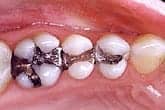
- These amalgam fillings are made of silver and mercury.
-
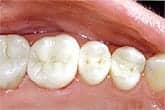
- Here they are replaced with composite fillings, which are mercury-free.
However, placing them properly requires total isolation of the tooth and specialized bonding techniques. Some dentists, trained to place the easier amalgam restorations, are uncomfortable with these techniques and may have problems getting them to work correctly.